
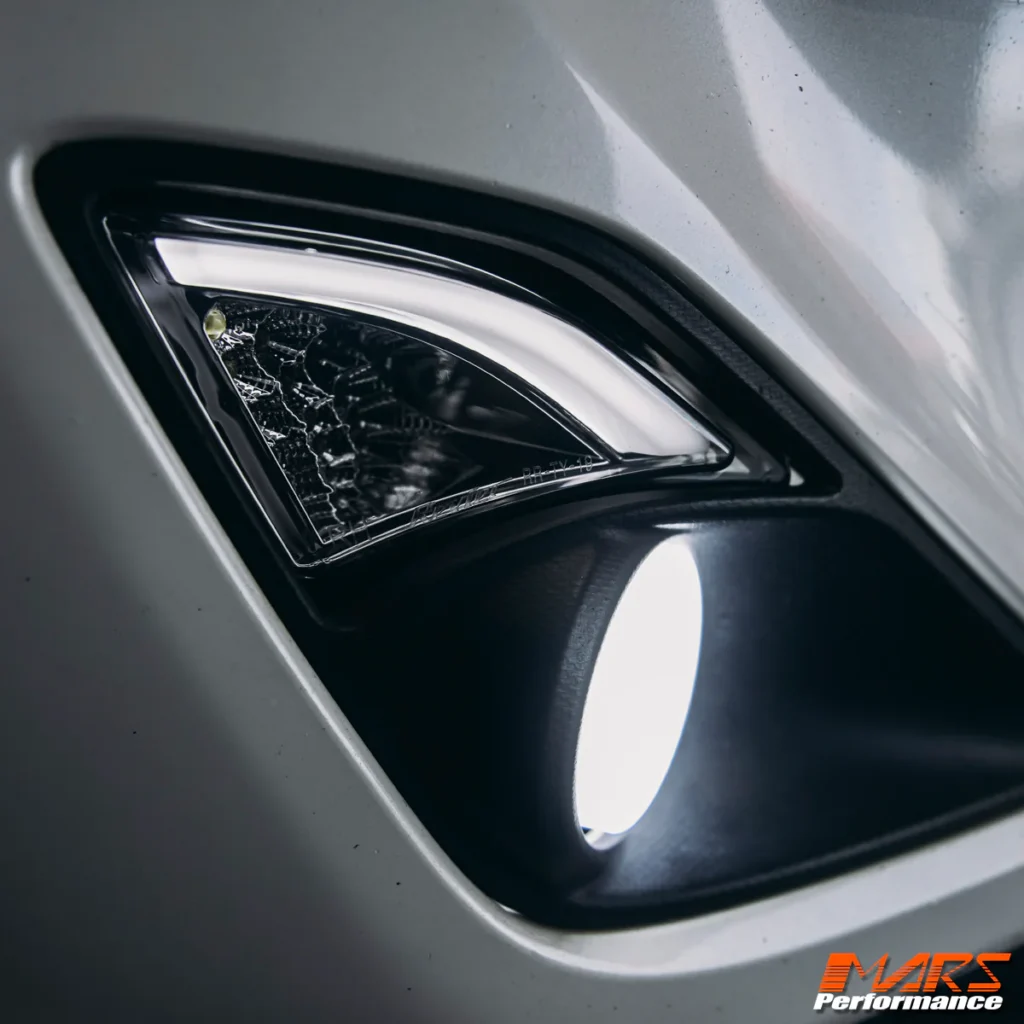
How to Self Fix Fog Lights: A Complete DIY Diagnostic and Repair Guide
Fog lights are purpose-built optical systems designed to cut beneath the scattering layer of atmospheric moisture — not through it. When they fail, you lose a critical safety tool during the exact conditions that demand maximum visibility. The good news? The vast majority of fog light failures — blown bulbs, corroded sockets, failed relays, or shattered lenses — are fully DIY-repairable in a single afternoon with basic hand tools. This guide gives you the full mechanical picture: diagnosis, teardown procedure, component-by-component repair, torque specs, and upgrade paths.
Table of Contents
- How Fog Lights Actually Work (Optical Physics)
- Safety Precautions Before You Begin
- Tools and Parts You’ll Need
- Fog Light Diagnostic Troubleshooting Matrix
- Step-by-Step: Accessing the Fog Light Assembly
- Step-by-Step: Replacing a Blown Fog Light Bulb
- Step-by-Step: Diagnosing and Fixing Electrical Faults
- Step-by-Step: Replacing a Cracked or Fogged Lens/Housing
- Relay and Switch Replacement
- Upgrading to LED Fog Lights
- Fog Light Aiming and Alignment
- Parts Cost Breakdown Table
- Common Mistakes DIYers Make
- FAQs
1. How Fog Lights Actually Work (Optical Physics)
Understanding the optical design of fog lights is what separates a proper repair from a botched one. Fog lights use a wide, flat, horizontal beam pattern — sometimes called a “bar” or “pencil beam” — projected at a sharp downward cutoff angle, typically 10–12 degrees below horizontal. This geometry is deliberate: it illuminates the road surface just ahead of the vehicle (roughly 5–20 meters) while keeping the light beam below the fog layer, which sits at eye level and above.
Standard halogen fog lights use H11, H8, H16, or PSX24W bulb bases depending on the platform. Some factory assemblies use H3 (wedge-type dual-pin) configurations on older vehicles. The reflector bowl behind the bulb is a multi-faceted parabolic or free-form reflector (FFR), precision-stamped and chrome-plated to produce that specific beam spread. When a bulb is replaced with the wrong base type or wattage, or when the housing is cracked and allows moisture infiltration, this optical geometry is destroyed — even if the light still illuminates.

2. Safety Precautions Before You Begin
Before you reach for a wrench, establish a safe working environment:
- Disconnect the negative battery terminal (10mm wrench) and wait 5 minutes before touching any bulb or electrical connector. HID fog lights retain charge in their ballasts even after disconnection — treat them as live.
- Let halogen bulbs cool for at least 20 minutes if the lights were recently on. Quartz halogen envelopes reach 300–600°C during operation.
- Never touch a halogen or HID bulb envelope with bare skin. Skin oils cause localized thermal stress that leads to premature envelope failure. Use nitrile gloves or wrap bulbs in a clean lint-free cloth.
- Chock the wheels if you’re working near the front of the vehicle on a slope.
- Do NOT operate the fog light switch during diagnosis with the housing open and the bulb exposed — ultraviolet output from halogen and HID sources can cause corneal burns.
3. Tools and Parts You’ll Need
Tools
- 10mm socket and ratchet (battery terminal, often housing bolts)
- Phillips and flat-blade screwdrivers (shroud clips, retaining screws)
- T15, T20, T25 Torx drivers (common on German and Asian platforms)
- Flathead trim removal tool / plastic pry bars (bumper fascia clips)
- Digital multimeter (DMM) — mandatory for electrical diagnosis
- Test light probe (12V)
- Wire terminal pick set (for backprobing connectors without piercing insulation)
- Heat gun or hair dryer (lens resealing, if applicable)
- Lens headlight restoration kit (if polishing rather than replacing)
Replacement Parts (Platform-Specific)
- Replacement bulb (match OEM base type — check SYLVANIA/OSRAM cross-reference)
- Fog light relay (typically a Bosch 0 332 019 150 standard mini-relay or platform-equivalent)
- 15A or 20A blade fuse (check your fuse block diagram)
- Replacement housing assembly (if lens is cracked)
- Dielectric grease (Permatex 22058 or equivalent)
- Electrical contact cleaner (CRC 05103 or equivalent)
- Self-amalgamating tape or marine-grade heat shrink (for any wiring repairs)
4. Fog Light Diagnostic Troubleshooting Matrix
This is the single most valuable diagnostic tool in this guide. Work through it systematically before you pull anything apart.
| Symptom | Probable Fault(s) | Test Method | DIY Fix | Severity |
|---|---|---|---|---|
| Both fog lights completely dead | Blown fuse, failed relay, faulty switch, open wiring ground | Check fuse first (visual + DMM continuity); then relay; then switch voltage | Replace fuse/relay/switch | Low–Medium |
| One fog light dead, one works | Blown bulb, failed socket, broken wire to that unit | DMM voltage at connector: 12V present = bad bulb or socket | Replace bulb; clean/replace socket | Low |
| Fog lights flicker intermittently | Corroded socket terminals, loose ground connection, failing relay | Wiggle harness while light is on; backprobe terminals for voltage drop | Clean terminals, re-seat ground, replace relay | Medium |
| Fog light dims significantly over time | Lens oxidation (UV degradation), bulb nearing end-of-life, partial ground loss | Visual lens inspection; DMM voltage drop test across ground path | Polish/replace lens; replace bulb; repair ground | Low–Medium |
| Light works but beam pattern is wrong | Cracked/missing reflector, wrong replacement bulb type, misaimed housing | Visual inspection of reflector bowl; verify bulb base/wattage | Replace housing; install correct bulb; re-aim | Medium |
| Moisture/condensation inside lens | Failed housing seal, cracked lens, missing vent plug | Press housing against a light source and look for cracks; inspect vent | Reseal with automotive silicone; replace housing | Medium |
| Fog light fuse blows repeatedly | Short circuit in wiring, incorrect fuse rating, shorted bulb socket | DMM resistance test on fog circuit (should read bulb resistance ~4–8Ω for H11); inspect harness for chafe points | Locate and repair short; verify fuse rating | High |
| Relay clicks but no light output | Bad ground at housing, open circuit between relay and bulb | Probe output terminal of relay connector for 12V; then check housing ground with DMM | Repair/add chassis ground; repair wiring | Medium |
| Fog lights stay on when switched off | Failed relay contacts (welded), shorted switch | Unplug relay — if lights go out, relay has welded contacts | Replace relay immediately | Medium–High |
| HID fog light strobes/flashes at startup | Failing ballast, low voltage at ballast input, failing igniter | Check voltage at ballast input connector (should be >11.5V) | Replace ballast or igniter | High |
5. Step-by-Step: Accessing the Fog Light Assembly
The access procedure varies by platform, but the following covers approximately 85% of production vehicles on the road today.
Method A: Underbody Access (Most Common — Compact and Midsize Cars)
Many modern vehicles provide access to the fog light bulb socket through the wheel well liner or through the underside of the front bumper fascia, without requiring bumper removal.
- Turn the steering wheel to full lock (toward the side you’re servicing). This opens a significant gap between the wheel well liner and the bumper, providing hand access to the rear of the fog light housing on many platforms.
- Locate the plastic undertray or splash shield. On vehicles with a full front undertray, you’ll need to remove 6–10 self-tapping plastic screws (typically Phillips or T20 Torx) to drop the panel. Some use push-pin retainer clips — press the center pin inward and pull the collar.
- Locate the fog light wiring harness running along the inside of the bumper beam. Follow it to the rear of the housing to find the twist-lock bulb holder (typically requires 60–90 degrees counterclockwise rotation to release).
- Unplug the electrical connector — most use a single-tab push-button locking connector. Press the tab inward while pulling the connector body, not the wires.
Method B: Bumper Fascia Removal (Required for Full Housing Replacement)
Some vehicles — particularly trucks, full-size SUVs, and vehicles with integrated DRL/fog combination units — require partial or full bumper fascia removal.
- Remove the upper grille retaining clips (typically 6–10 clips across the top).
- Remove any visible bumper-to-fender bolts (typically 2–4 per side, 10mm).
- Unclip the fascia from the lower bumper beam. The fascia is retained by a series of plastic push-in retainers along the lower edge. Use a plastic trim tool — never a metal screwdriver — to avoid cracking the fascia tabs.
- Disconnect any turn signal, parking light, and fog light connectors as the fascia pulls away from the vehicle.
- With the fascia clear, the fog light housing is retained by two to four mounting bolts — typically 8mm or 10mm — threading into a stamped steel bracket or directly into the bumper beam structure.

6. Step-by-Step: Replacing a Blown Fog Light Bulb
This is the most common fog light repair. Execution matters — a mishandled bulb replacement causes more comebacks than any other error.
Identifying the Correct Bulb
Before ordering, verify the exact OEM bulb specification using:
– Your owner’s manual electrical section
– The SYLVANIA Automotive Bulb Guide (online lookup by year/make/model)
– The NHTSA vehicle recall and technical service bulletin database (worth checking — some fog light assembly failures have active TSBs)
Common fog light bulb specifications:
| Bulb Base | Typical Wattage | Color Temperature (OEM Halogen) | Common Applications |
|---|---|---|---|
| H11 | 55W | 3,200K | Toyota Camry, Honda Accord, Ford F-150 (2010+) |
| H8 | 35W | 3,200K | BMW 3 Series, MINI Cooper, Chevy Malibu |
| H16 (JP style) | 19W | 3,000K | Toyota Corolla, Prius, Subaru Outback |
| H3 | 55W | 3,200K | Classic/universal, many trucks pre-2005 |
| PSX24W | 24W | 3,200K | Dodge Ram 1500, Jeep Grand Cherokee |
| 5202 / H16 (US) | 12W–19W | 3,000K | Chevy Silverado 2007–2013, Equinox |
Replacement Procedure
- With the housing accessed and the connector unplugged, rotate the bulb holder counterclockwise approximately 60–90 degrees and pull straight out.
- The bulb is retained in the holder either by a spring wire clip (H11, H8) or a bayonet twist lock (H3). Release the retaining clip or rotate the bulb counterclockwise to free it.
- Do not touch the new bulb glass. Install with gloves on. If you accidentally touch it, wipe with a clean cloth moistened with isopropyl alcohol immediately.
- Seat the new bulb positively — you’ll feel it click or seat against the socket locator tab.
- Apply a thin film of dielectric grease to the exterior of the bulb holder O-ring and inside the electrical connector terminals before reassembly. This prevents corrosion and moisture infiltration — the leading cause of recurrent bulb failure.
- Reinstall the bulb holder with a clockwise twist until it locks. Reconnect the electrical connector (you’ll hear a positive click).
- Test before reassembling the shroud or undertray. Turn on the fog lights and verify correct beam pattern on a flat surface or wall.
7. Step-by-Step: Diagnosing and Fixing Electrical Faults
Electrical faults are where most DIYers give up unnecessarily. A systematic approach with a digital multimeter resolves 95% of fog light electrical issues in under 30 minutes.
Step 1: Check the Fuse
Locate the fog light fuse in your fuse block (refer to the diagram on the fuse block cover or in your owner’s manual). Fog light circuits typically use a 15A or 20A mini blade fuse.
- Remove the fuse and perform a visual inspection — a blown fuse will show a broken wire filament inside the clear window.
- Confirm with a DMM set to continuity/resistance: a good fuse reads near 0Ω; a blown fuse reads OL (open loop).
- If the fuse has blown, do not replace it without investigating why. A fuse blows because of overcurrent — look for a short circuit in the wiring.
Step 2: Check the Relay
The fog light relay is typically located in the underhood fuse/relay box (UFJB). It’s usually a standard Bosch-type ISO mini-relay (four or five terminal).
Relay Test Procedure (DMM method):
1. Identify the relay terminals: 85 (coil ground), 86 (coil power), 30 (common/power in), 87 (normally open/power out), 87a (normally closed)
2. With the relay removed, apply 12V to terminal 86 and ground terminal 85 using jumper wires from the battery.
3. Set your DMM to continuity. Probe terminals 30 and 87 — you should hear a click and read continuity when power is applied.
4. If there’s no click and no continuity: relay coil or contacts have failed — replace it.
5. Verify the replacement relay matches the original’s current rating and terminal layout (typically 30A contact rating for fog light circuits).
Step 3: Check for Voltage at the Housing Connector
With the fog light switch ON and the relay confirmed functional:
1. Set your DMM to DC Volts.
2. Backprobe the positive terminal of the fog light connector (use a terminal pick to avoid piercing insulation — a pierced wire invites corrosion).
3. You should read 12–14.4V with the engine running or ~12V with key-on, engine-off.
4. If you read 0V with the relay clicking, there’s an open circuit between the relay output and the

