
Why Do My Brakes Squeal When I First Start Driving? 7 Causes Explained
Quick Answer: Brakes that squeal for the first few stops of the day — then go quiet — are almost always caused by surface rust on the rotors. This is completely normal and harmless. Cast iron rotors develop a thin rust layer overnight, especially in damp weather, and the first few brake applications scrub it off. If the squealing continues past the first 2–3 minutes of driving, or gets worse over time, something else needs attention.
I want to be upfront about something before diving into causes: the vast majority of “brakes squeal in the morning” complaints I’ve seen over the years are surface rust — nothing more. It’s one of the most common reasons people bring their cars in unnecessarily, having convinced themselves something is seriously wrong. A quick test: if the squeal disappears completely after your first 3–4 brake applications and doesn’t return for the rest of the day, your brakes are almost certainly fine.
The situations that do need attention are the ones where the squeal persists, returns every time you brake, or is accompanied by grinding, pulling, or a spongy pedal. That’s what this guide covers — how to tell the difference, and what to do when it actually needs fixing.
The Morning Test — Is Your Squeal Normal or Not?
Before anything else, run this simple test:
Step 1: Note whether the squeal happens only on the very first brake application after the car has been parked overnight, or whether it continues throughout your drive.
Step 2: Apply the brakes gently 3–4 times at low speed in a quiet car park.
Step 3: After those applications, brake normally. Does the sound:
- Disappear completely and not return? → Surface rust — completely normal, no action needed
- Disappear but come back later, especially after the car sits at traffic lights? → Sticking caliper or glazed rotors
- Continue throughout the drive? → Worn pads, glazed pads, or hardware issue
- Get worse over time or become grinding? → Worn pads — inspect immediately
7 Causes of Brakes Squealing When You First Start Driving
1. Surface Rust on Rotors — Normal, Very Common
Cast iron brake rotors begin rusting within hours of exposure to moisture. Overnight dew, rain, humidity, or even washing the car leaves a thin orange-brown rust layer on the rotor surface by morning.
What happens: The first time you press the brake pedal, the brake pad scrapes across this rust layer. The rust particles trapped between the pad and rotor create a rough scraping or squealing sound — then the rust is gone, and the brakes are silent again.
Why it’s more noticeable on some cars: Rotors with more iron content rust faster. Cars parked outside rust overnight faster than garage-kept cars. Humid coastal climates cause more rust than dry inland areas. Cars that aren’t driven daily can develop enough rust for the sound to persist for several stops.
When it becomes a problem: Surface rust that’s left on the rotor for days — from a car that’s been parked for a week or more — can etch into the rotor surface rather than just sitting on top. This creates minor pitting that takes many more stops to clear. Still not dangerous in most cases, but worth noting if your car sits unused frequently.
Action needed: None, in most cases. If the noise persists for more than 5 minutes of gentle driving, read on.

2. Worn Brake Pad Wear Indicators
Every modern brake pad has a small metal tab — the wear indicator — deliberately positioned to contact the rotor when the pad friction material wears thin. This contact creates a high-pitched squeal that’s designed to be impossible to ignore.
The critical distinction from surface rust: Wear indicator squealing is consistent — it happens on every brake application, not just the first few of the day. It may be quieter when brakes are cold and louder once warm. It doesn’t go away after a few applications.
How to check pad thickness: Look through the wheel spokes at the brake caliper. The outer pad is usually visible pressed against the rotor face. You should see at least 3mm of friction material (roughly the thickness of two pound coins stacked). If you can barely see any pad material, or the metal backing plate is close to the rotor, replacement is overdue.
Urgency: High. Worn pads that have reached the wear indicator should be replaced within days, not weeks. Beyond the indicator, the metal backing plate contacts the rotor — at that point you’re doing expensive rotor damage with every stop.
For more on how long you can safely drive once the warning appears, read our guide on brake pad warning light — how long do I have.
Cost:
- DIY pad replacement: £20–£70 per axle
- Shop: £80–£200 per axle
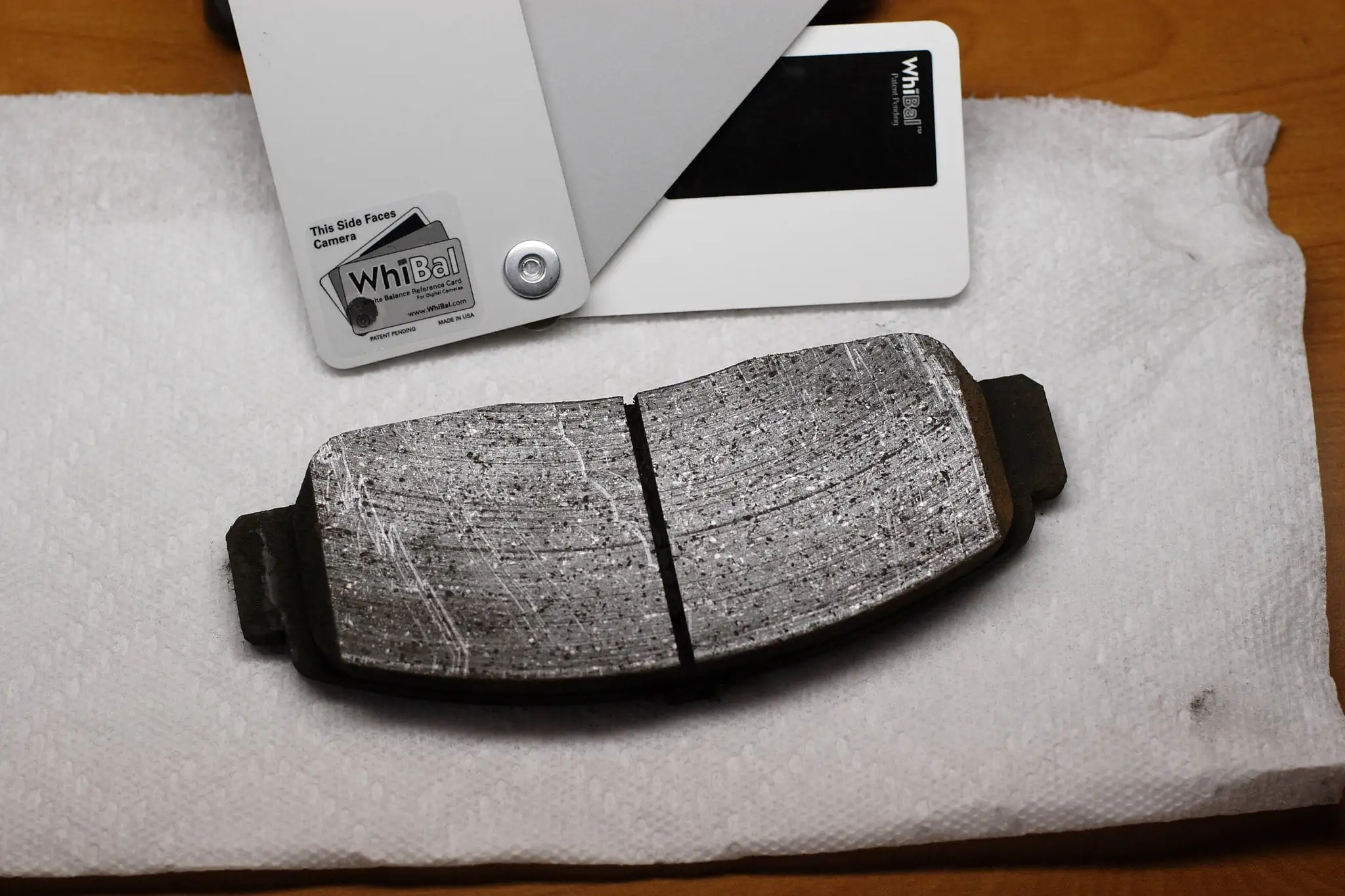
3. Glazed Brake Pads or Rotors
Glazing happens when brakes overheat — the pad surface hardens and becomes smooth rather than maintaining the slightly rough texture needed for good friction. A glazed pad on a glazed rotor surface creates a squealing vibration, particularly when the brakes are cold and the components haven’t expanded to their normal operating clearances.
What causes glazing:
- Riding the brakes downhill (sustained light pressure generates heat without the cooling effect of releasing)
- New pads that were bedded in incorrectly — too aggressively or without proper cooling intervals
- Cheap aftermarket pads with compounds that can’t handle normal heat cycles
- A sticking caliper keeping one pad in constant light contact with the rotor
How to tell if glazing is your cause: Look at the pad surface if you can see it. A healthy pad surface is slightly rough and matte. A glazed pad has a shiny, almost polished appearance. Similarly, glazed rotors have a shiny banded appearance on the braking surface rather than the dull grey of a properly used rotor.
The warming pattern: Glazing-related squeal often gets worse as brakes warm up, then may improve slightly — the opposite of surface rust which gets better quickly. This is because heat expands glazed surfaces in ways that change the vibration characteristics.
Fix: Light glazing can sometimes be addressed by a controlled series of moderate stops from speed to allow the pad surface to re-texture. Severe glazing requires pad replacement and often rotor resurfacing.
Cost:
- Rotor resurfacing: £20–£40 per rotor at a machine shop
- New rotors: £40–£120 per rotor DIY, £150–£350 per axle at a shop
Our article on brake pedal shakes when braking covers rotor surface issues in more detail alongside the shaking symptoms that often accompany severe glazing.

4. Sticking Brake Caliper
A caliper that isn’t releasing fully keeps the brake pad in light contact with the rotor even when you’re not pressing the pedal. This causes the pad to drag, heat up unevenly, and eventually squeal — often most noticeably when the brakes are first applied after sitting overnight, because the sticking piston is at its stiffest when cold.
The warming pattern: A sticking caliper squeal often improves after a few minutes of driving as the caliper warms and the piston moves more freely — which can mislead people into thinking it’s just surface rust. The key difference: one wheel will be noticeably hotter than the others after a short drive. Place the back of your hand near (not on) each wheel rim — the hot one has a sticking caliper.
Other signs of a sticking caliper:
- Car pulling to one side under braking
- One brake pad wearing significantly faster than the other on the same axle
- Burning smell from one wheel after driving
- Brake pedal feeling like it takes more effort than usual
Fix: Caliper slide pin cleaning and lubrication resolves most mild cases. Severely seized pistons need caliper replacement.
See our detailed guide on how to do a brake caliper piston replacement for the full process.
Cost:
- Slide pin service: £5 in grease, £60–£100 at a shop
- Full caliper replacement: £120–£300 including labour

5. Loose or Missing Brake Hardware
Brake calipers are held precisely in position by a system of clips, shims, anti-rattle springs, and retaining pins. These components aren’t decorative — they prevent the pads from vibrating against the caliper bracket. When hardware is missing, corroded, or incorrectly installed, the pads rattle and vibrate freely, especially on cold starts when everything is loose before thermal expansion closes up clearances.
What creates this hardware noise: The brake pad sits in a slot in the caliper bracket. Small clips press the pad against the bracket to prevent it from rattling. Anti-squeal shims — thin plates between the pad backing and the caliper — dampen vibrations before they can become audible squealing. If these are missing or worn out, the pad vibrates freely and squeals.
When this is most likely: Hardware problems are most common after brake jobs where the mechanic reused old, corroded hardware rather than fitting the new hardware that comes with quality pad sets. Always ask whether hardware was replaced when your brakes were last serviced.
How to check: Remove the wheel and look at the caliper bracket. You should see clips or springs holding the pads snugly in position with minimal play. If the pads rattle when pushed by hand, hardware is worn or missing.
Cost: Brake hardware kit: £10–£25. Installation: 30–60 minutes.
6. New Brake Pads — Normal Bedding-In Squeal
If you’ve recently had new brake pads fitted (within the last 300–500 miles) and they’re squealing, this is very likely normal. New pads need to “bed in” — a process where pad material transfers evenly onto the rotor surface, creating the proper friction interface.
During this process, some squealing, light grinding, and occasional vibration is expected and not a cause for concern.
When bedding-in squeal is normal:
- Started within 50 miles of new pad installation
- Diminishing over time (getting quieter over the first few hundred miles)
- Not accompanied by pulling, grinding metal sounds, or spongy pedal
When post-installation squeal is a problem:
- Still squealing at 500+ miles with no improvement
- Worse than when first installed
- Accompanied by uneven pad wear on inspection
- One side squealing but not the other (sticking caliper or hardware issue)
Proper bedding-in procedure: From 30 mph, apply moderate brake pressure down to 5 mph (don’t stop completely). Allow 30 seconds of cooling. Repeat 8–10 times. This procedure transfers a thin, even layer of pad material onto the rotor surface and dramatically reduces bedding-in noise.

7. Contaminated Brake Pads or Rotors
Oil, brake fluid, grease, or water can contaminate the friction surface of brake pads and rotors. Contaminated surfaces don’t generate clean friction — they generate vibration and squealing, often with an unpredictable quality that varies with temperature and braking pressure.
Common contamination sources:
- Leaking wheel bearing seal allowing grease onto the rotor
- Caliper piston seal failure allowing brake fluid to contaminate the pad
- Careless lubrication of caliper hardware — grease accidentally applied to the rotor or pad face
- Driving through deep puddles repeatedly (water contamination — usually temporary)
How to identify contamination: Remove the wheel and look at the pad and rotor surface. Oil or grease contamination leaves a dark, oily residue that may be visible on the rotor face. Brake fluid contamination leaves a lighter residue. Water contamination usually resolves on its own.
Fix: Contaminated pads must be replaced — you cannot clean oil or grease out of brake pad friction material once it has soaked in. The rotor can usually be cleaned with brake cleaner spray if the contamination isn’t severe.
Brembo Brake Pads — OEM quality, correct shims included]
For a comprehensive look at what contaminated brake fluid does to braking performance, see our guide on spotting 8 signs of contaminated brake fluid.
When Is Brake Squealing Dangerous?
| Situation | Dangerous? | Action |
|---|---|---|
| Squeal first 2–3 stops, then silent | No | Normal surface rust — no action |
| Squeal that fades after warming up | Monitor | Could be glazing or sticking caliper |
| Consistent squeal every time you brake | Yes — pads worn | Inspect and replace pads |
| Grinding metal sound | Yes — urgent | Stop driving, inspect immediately |
| Squeal + car pulling to one side | Yes | Sticking caliper — fix this week |
| Squeal + spongy brake pedal | Yes — urgent | Brake fluid or caliper issue |
| Squeal + brake pedal pulsing | Moderate | Glazed or warped rotors |
The grinding sound is the critical threshold. When brake noise transitions from squealing to grinding — a harsh, rough metal-on-metal sound — the pad friction material is completely worn away and steel is contacting the rotor. At this point:
- Braking distance increases significantly
- Rotors are being damaged with every stop
- Continued driving can cause rotor failure
For more on the full range of warning signs that indicate a brake system problem, read our comprehensive guide on warning signs of brake system problems.
Fixing Squeaky Brakes — What Actually Works
Lubricate the right parts. Brake lubricant goes on caliper slide pins, the back of the pad backing plate, and the pad contact points on the caliper bracket. It never goes on the rotor face or the pad friction surface. This is the most common mistake in DIY brake work — grease on the wrong surfaces makes noise worse, not better.
Replace hardware when replacing pads. Quality pad sets include new anti-rattle clips and shims. Always install the new hardware — don’t reuse old corroded clips. The hardware is the reason new pads on a car with proper installation are quiet, while the same pads on a car with old hardware squeal.
Bed in new pads properly. The 10-stop bedding procedure takes 15 minutes and makes a significant difference to how quiet new brakes are for their entire lifespan. Don’t skip it.
Use quality pads. Budget brake pads from unbranded sources often use harder compounds that squeal more and transfer material unevenly. Brands like Brembo, EBC, ATE, and Bosch consistently produce quieter results than cheap alternatives — the price difference is typically £15–£30 per axle.
EBC Greenstuff Brake Pads — low-dust, low-noise compound for daily driving]
Frequently Asked Questions
Is it normal for brakes to squeal first thing in the morning? Yes — in most cases. A squeal that appears on the first 2–3 brake applications after overnight parking, then disappears completely for the rest of the drive, is almost always surface rust. Cast iron rotors develop a thin rust layer overnight from atmospheric moisture. The first few brake applications remove it. No action is needed.
My brakes squeal in the rain — is that normal? Some light squealing in heavy rain or immediately after driving through puddles is normal — water on the rotor surface changes the friction characteristics temporarily. If the squealing is severe or doesn’t stop after a few dry stops, have the brakes inspected. Contaminated or nearly-worn pads are much more affected by water than healthy brakes.
Will anti-squeal spray stop my brakes from squealing? Anti-squeal sprays and pastes applied to the back of brake pads can help reduce vibration-related squealing from hardware issues. They should never be applied to the pad friction surface or rotor. Used correctly, they help — but they’re not a substitute for addressing the underlying cause.
My new brakes squeal worse than my old ones did — why? Usually one of three reasons: the old hardware wasn’t replaced and the new pads are vibrating in worn bracket slots; the new pads weren’t bedded in properly; or the replacement pads are a different compound to what your car was designed for. Return to the garage — properly installed new brakes should be quieter than old worn ones, not louder.
How long should new brakes take to stop squealing? Most new brake setups settle within 200–400 miles of normal driving. If squealing persists beyond 500 miles, there’s an underlying issue — worn hardware, improper installation, or incompatible pad compound. Have it checked.
My brakes squeal only when it’s cold outside but not in summer — why? Cold temperatures affect brake components in several ways: rubber caliper seals are stiffer, caliper pistons move with more resistance, and metal components have more clearance before thermal expansion closes them up. All of these make cold-weather squealing more likely, even on brakes that are perfectly healthy. If the noise disappears once the car warms up and doesn’t affect braking performance, this is generally normal winter behaviour.
Should I be worried about brakes that squeal briefly then stop? Brief squealing that stops quickly — within the first 2–3 stops — is almost never a safety concern. It becomes a concern when: the squeal is getting progressively worse over weeks, it’s now happening on every stop rather than just the first, it’s accompanied by any grinding, or it’s associated with changes in pedal feel or braking performance. Those changes mean something has progressed from minor to needing attention.
How long does your squeal last — just the first stop or two, or throughout your whole drive? And does it happen equally in wet and dry weather? Those two details narrow down the cause very quickly — leave them in the comments.

